
Thunder Lizards Don’t Need Perfect Data
“You cannot implement AI until you fix your broken and dirty data.”
This might be the most expensive lie in enterprise technology. What if I told you the opposite is true? What if AI isn’t waiting for perfect data -it’s the fastest path to getting it?
As a business owner I have learnt that breakthrough companies don’t follow patterns; they break them. They become thunder lizards -solutions so powerful they create entirely new categories. Right now, whilst enterprises obsess over data perfection, thunder lizards are already hunting.
The Comfortable Lie of Sequential Transformation

We’ve built an entire industry around a comforting mythology: clean your data, organise your systems, then -and only then -implement AI. It feels logical. It feels safe. It’s also competitively self-destructive.
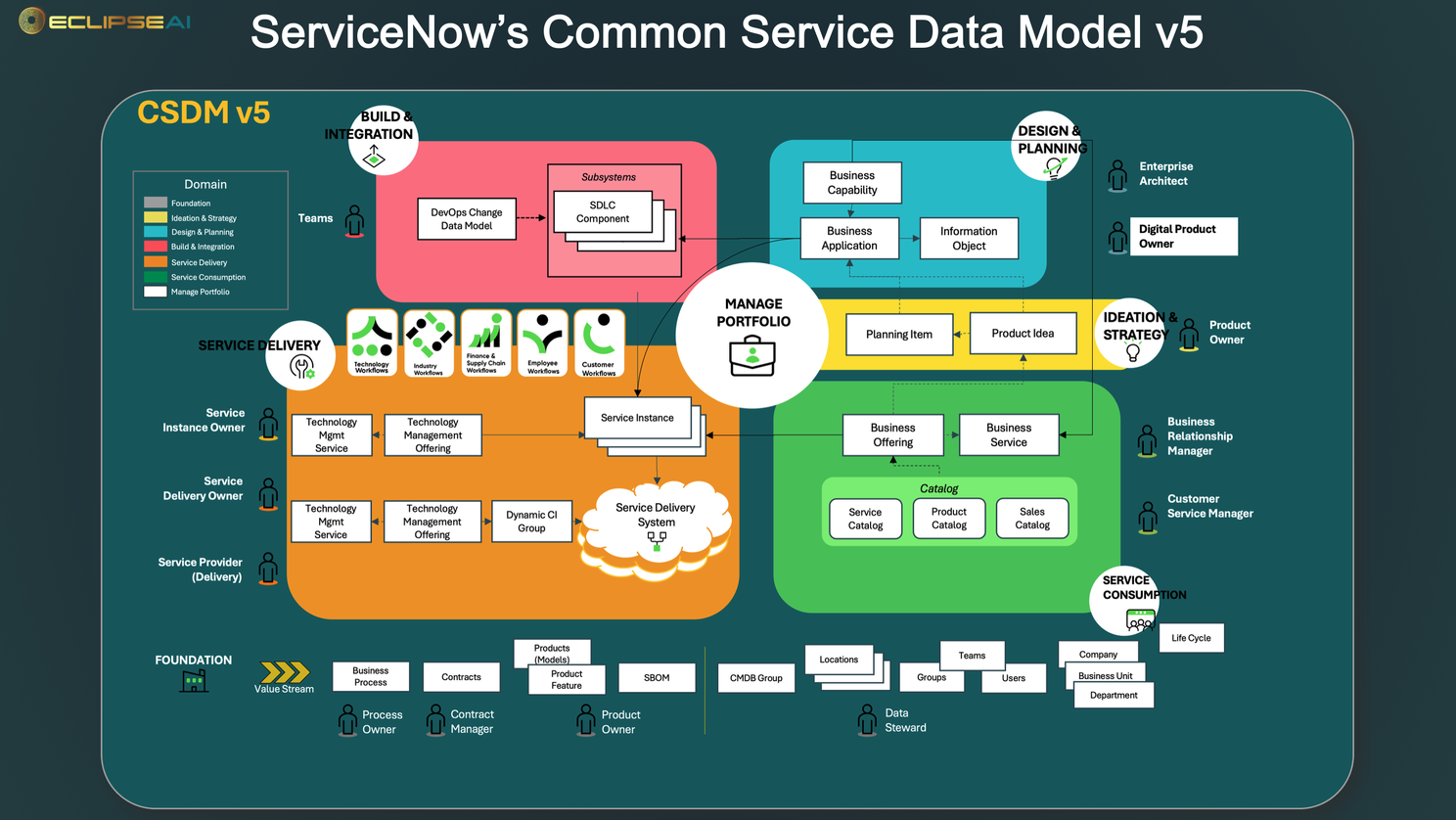
The architecture of the Common Service Data Model (CSDM) cries for it to be adhered to before you can use AI effectively. This sequential thinking assumes markets wait for your transformation. They don’t. Whilst you’re spending 18-24 months on data remediation, competitors are extracting value from AI with whatever data they have. They’re not winning because their data is better. They’re winning because they started.
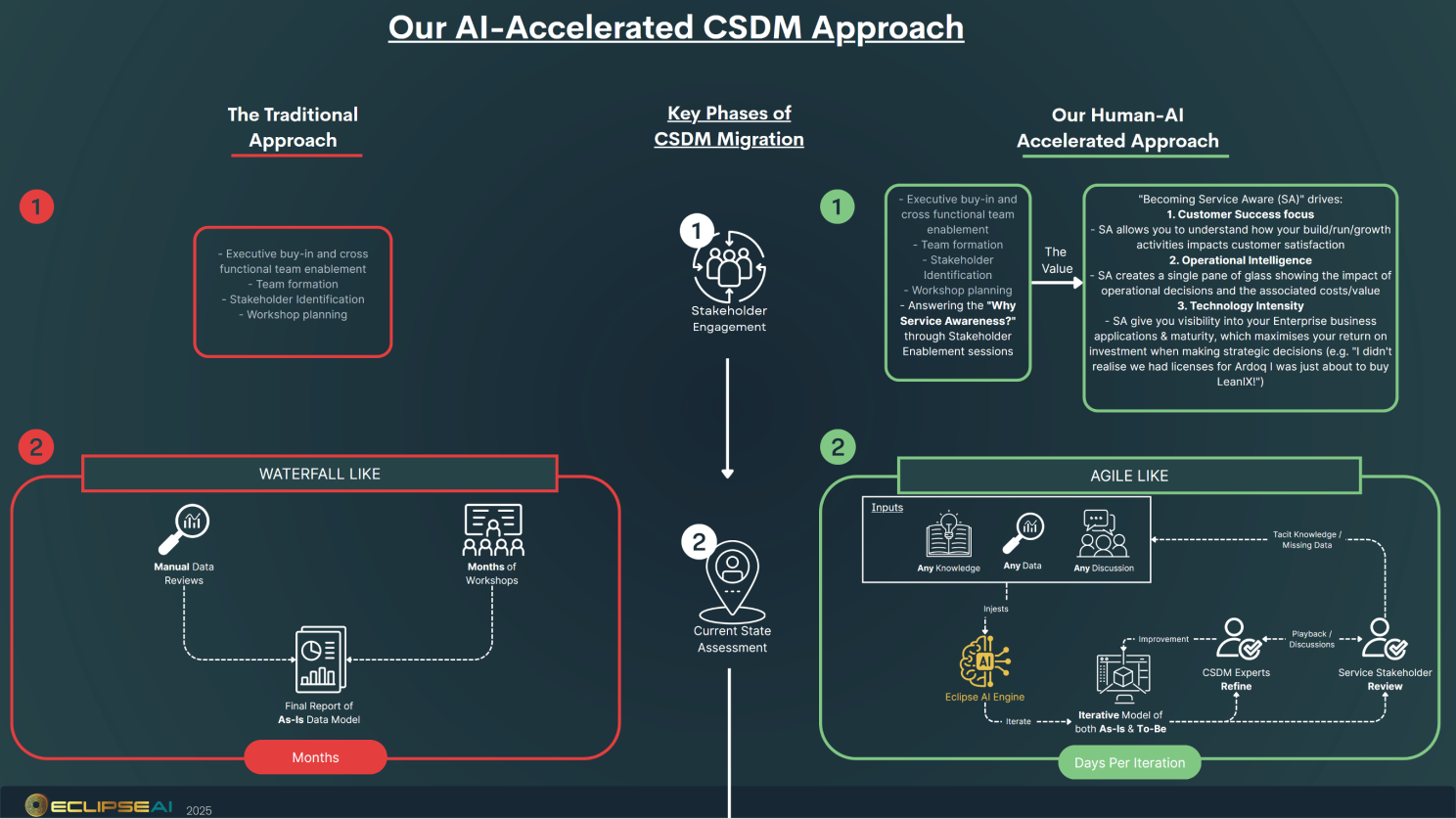
The maths doesn’t lie. Traditional data projects take two years. Markets now move at startup speed -measured in quarters, not years. By the time your data is “ready,” the competitive landscape has fundamentally shifted. You’ve perfected yesterday’s game whilst everyone else invented tomorrow’s.
The Pattern Break
Here’s what pattern-breakers understand: AI excels at finding signal in noise. It’s literally designed to identify patterns in chaos, to make sense of mess, to learn from imperfection.
Think about evolution. Life doesn’t wait for perfect conditions -it adapts to what exists. Thunder lizards didn’t emerge from pristine environments. They thrived in chaos, using their advantages to dominate messy ecosystems. Your AI strategy should work the same way.
The productive collision between AI and messy data creates something traditional approaches never could: a system that improves itself whilst delivering value. Every interaction teaches. Every query cleanses. Every decision enhances data quality.
A Thunder Lizard in the Wild: Our CSDM AI Expert
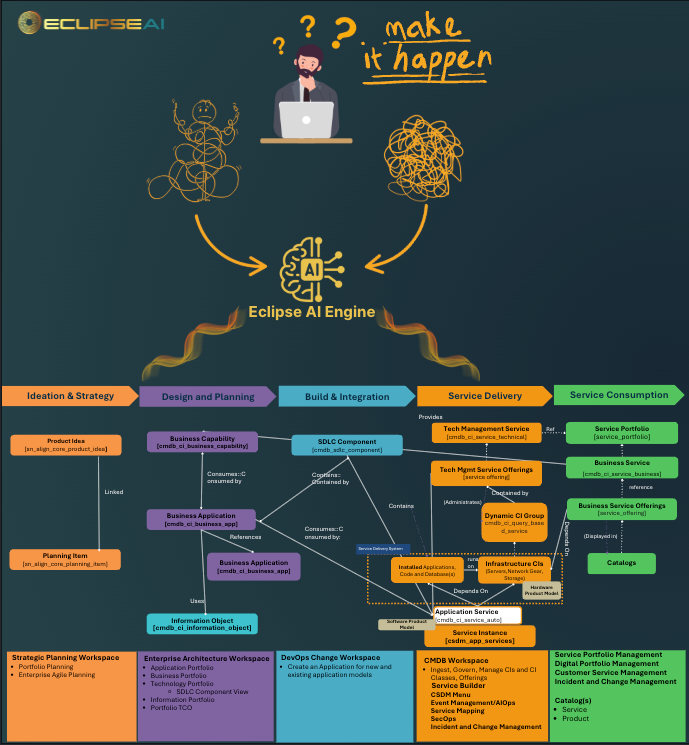
The CSDM AI Expert model we’ve built at Eclipse AI exemplifies this paradigm shift. Instead of demanding perfect ServiceNow data, it starts working immediately with whatever exists -broken relationships, inconsistent naming, orphaned services, the lot.
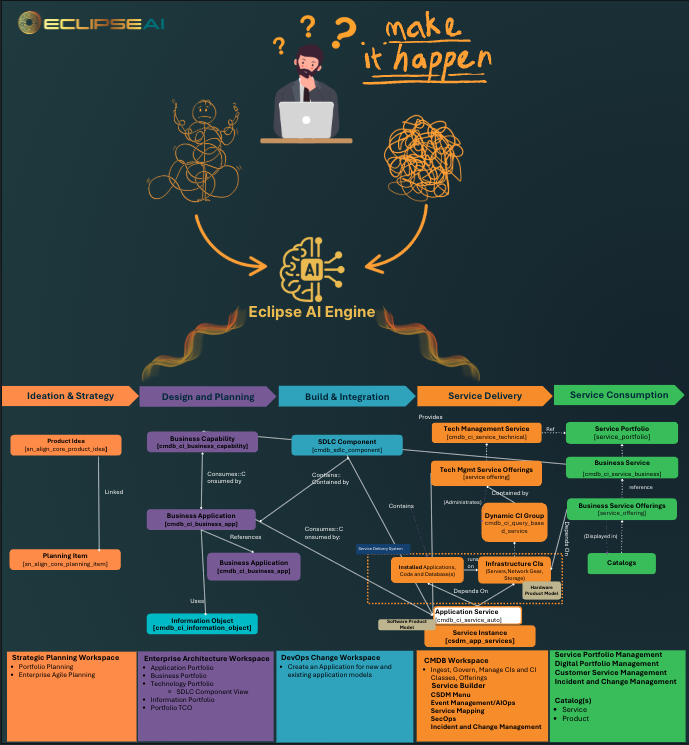
This model sits in our Eclipse AI Engine. Watch what happens: the AI identifies patterns humans miss. It spots that “Customer DB” and “CustomerDatabase_Prod” are the same service. It infers relationships from incident patterns. It learns your organisation’s unique vocabulary whilst simultaneously standardising it. Within hours, it’s delivering insights. Within days, it’s improving data quality. Within weeks, it’s transforming service intelligence and customer satisfaction.
This isn’t about replacing human expertise -it’s about amplifying it. AI + Human = Superhuman. The AI handles pattern recognition at scale whilst humans provide context and validation. Service by service, the transformation compounds. Each cleaned dataset makes the next one faster.
The chaos and confusion of technology services turned into structure in a fraction of the time.
The numbers tell the story: 30-50% reduction in implementation time. 80% baseline accuracy from day one. More importantly, continuous improvement rather than one-time projects.
The Exponential Advantage
The law of increasing returns applies perfectly here. Early movers don’t just get linear benefits -they get exponential advantages.
Traditional approach: Months of preparation, then a step-change improvement, then gradual decay as data drifts. Linear improvement, if you’re lucky.
AI-first approach: Immediate value, accelerating improvement, compound learning. The AI that starts messy becomes smarter faster than the AI that starts clean because it learns to handle complexity. Your messy data becomes your training advantage.
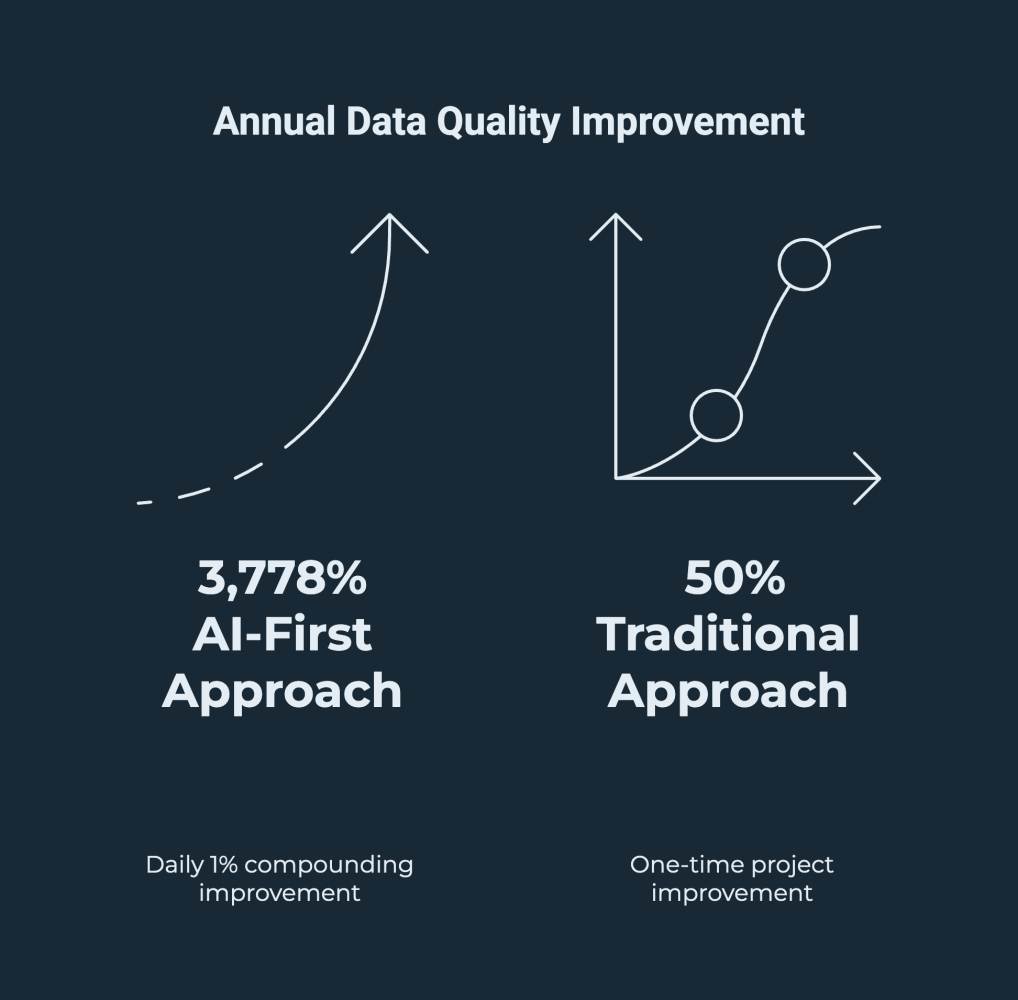
Consider velocity, not perfection. An AI system improving data quality 1% daily compounds to 3,778% improvement annually. A traditional project delivering 50% improvement once takes years to match that trajectory.
Why Most Organisations Will Miss This
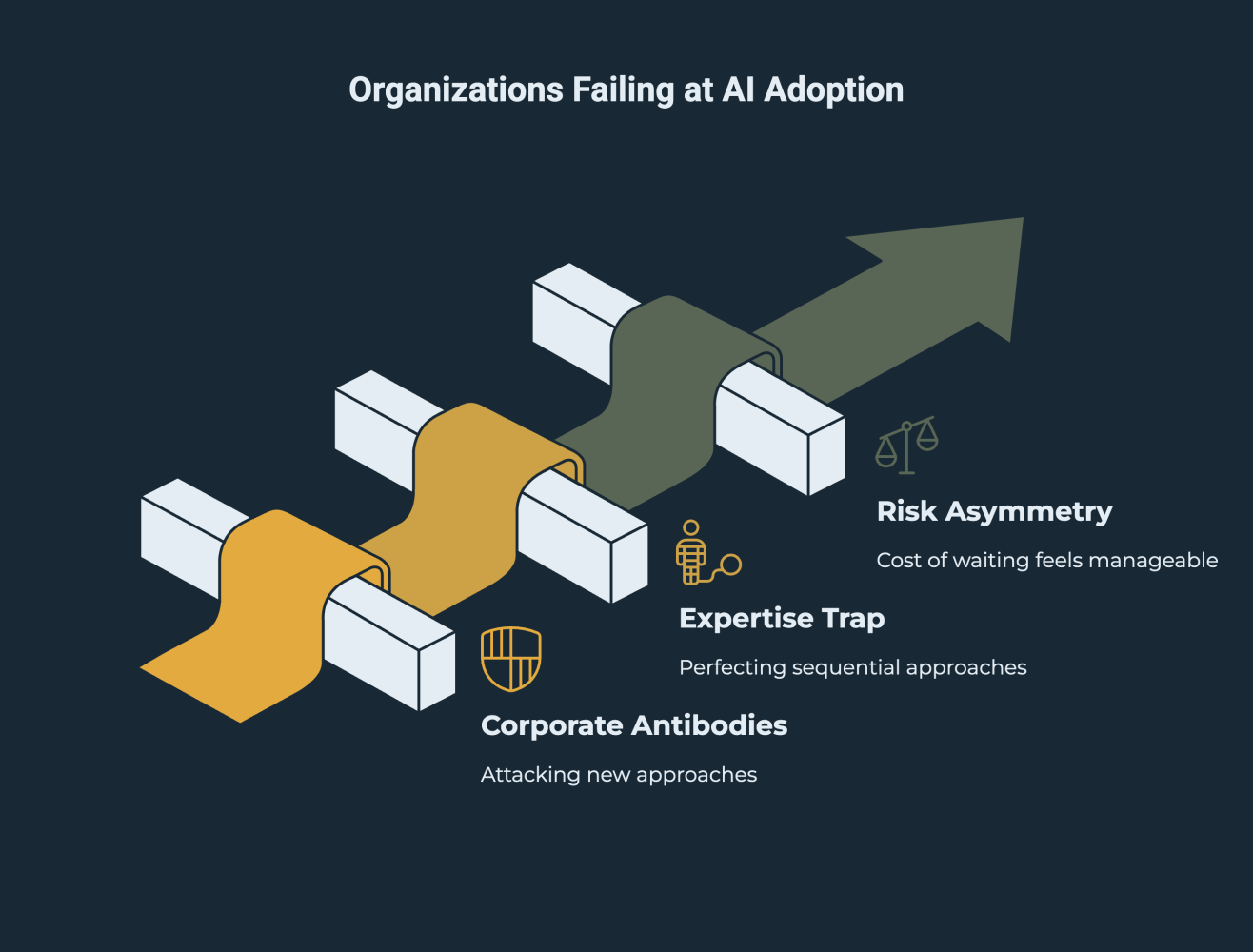
Incumbents fail at pattern breaks for predictable reasons. Corporate antibodies attack new approaches. “We’ve always done data projects first” becomes organisational gospel.
The expertise trap springs shut. Your best data architects, the ones who’ve spent careers perfecting sequential approaches, cannot see the pattern break. They’re solving for data perfection whilst competitors solve for business velocity.
Risk asymmetry blinds leadership. The cost of “doing AI wrong” feels massive. The cost of waiting feels manageable. This calculation ignores competitive reality: the risk of starting imperfect is dwarfed by the risk of starting late.
The Practical Thunder Lizard Strategy
Start with your messiest, highest-value service. Prove the pattern break where it matters most. If AI can fix your worst data whilst delivering value, everything else becomes easier.
Messiest service first. Perfected Data Model in minutes!
Run parallel tracks. AI improves data whilst humans validate improvements. Don’t pause operations for transformation -transform during operations. The plane rebuilds itself whilst flying.
Measure velocity, not milestones. Traditional projects celebrate reaching 95% data quality once. Thunder lizards celebrate improving 5% monthly, forever. Compound improvement beats step-change improvement every time.
Create feedback loops that accelerate learning. Every corrected relationship teaches the AI. Every validated improvement becomes a pattern to recognise. The system doesn’t just get better -it gets better at getting better.
The New Competitive Moat
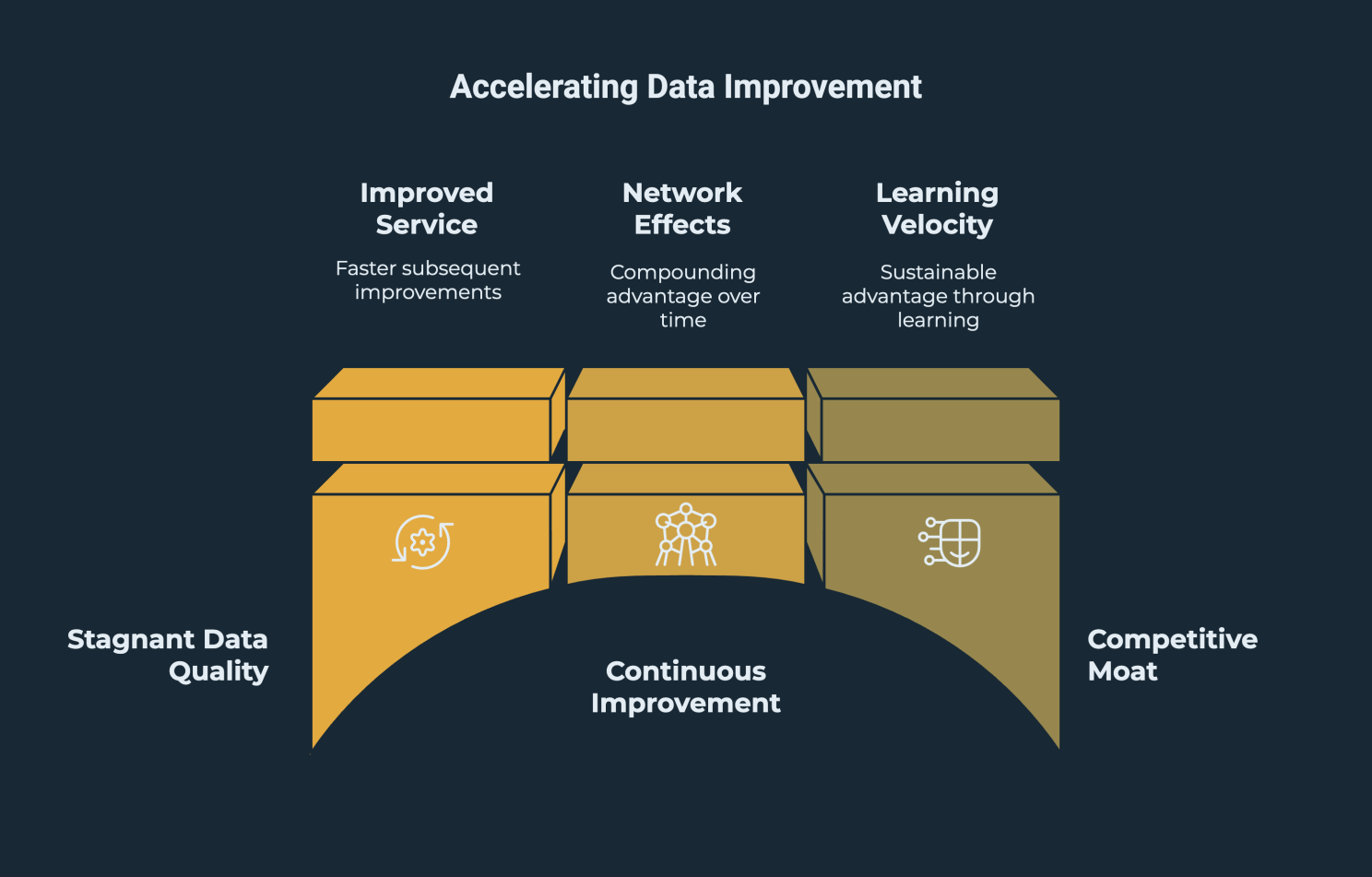
When data quality becomes output rather than input, everything changes. Your competitive moat isn’t your clean data -it’s your ability to continuously improve data faster than competitors.
Each improved service makes the next improvement faster. Network effects compound. The organisation that starts first doesn’t just get a head start -they get an accelerating advantage that becomes increasingly difficult to match.
Learning velocity becomes your sustainable advantage. Whilst competitors debate data readiness, your AI has processed millions of patterns, learned thousands of relationships, and improved hundreds of services.
The Choice Architecture
If there is one thing I have always taught here, breakthrough value comes from being non-consensus and right. The consensus says fix data first. The consensus is wrong.
The question isn’t “Is your data ready for AI?” That’s pattern-following thinking.
The question is “Can you afford to wait whilst AI makes your competitors’ data better than yours will ever be?”
Thunder lizards don’t ask permission. They don’t wait for perfect conditions. They create new realities through sheer force of capability. In the AI-enabled future, the companies that win won’t be those with the best data going in -they’ll be those who used AI to create the best data coming out.
Your competitors have already started. Every day you wait, their AI gets smarter, their data gets cleaner, and their advantage compounds.
What’s it going to be? Pattern follower or pattern breaker?
The thunder lizards are already hunting.